- September 14, 2026
- Posted by: fireexperts
- Category:
Heritage & Listed BuildingsHeritage Door Restoration, Farleigh School, Andover — Fire Door Experts
The building
Preserving history. Enforcing safety.
Farleigh School occupies a striking country-house main building near Andover, where the original timber joinery is part of the character of the place. We were asked to carry out two very different pieces of work here, and both demanded the same respect for the existing fabric.
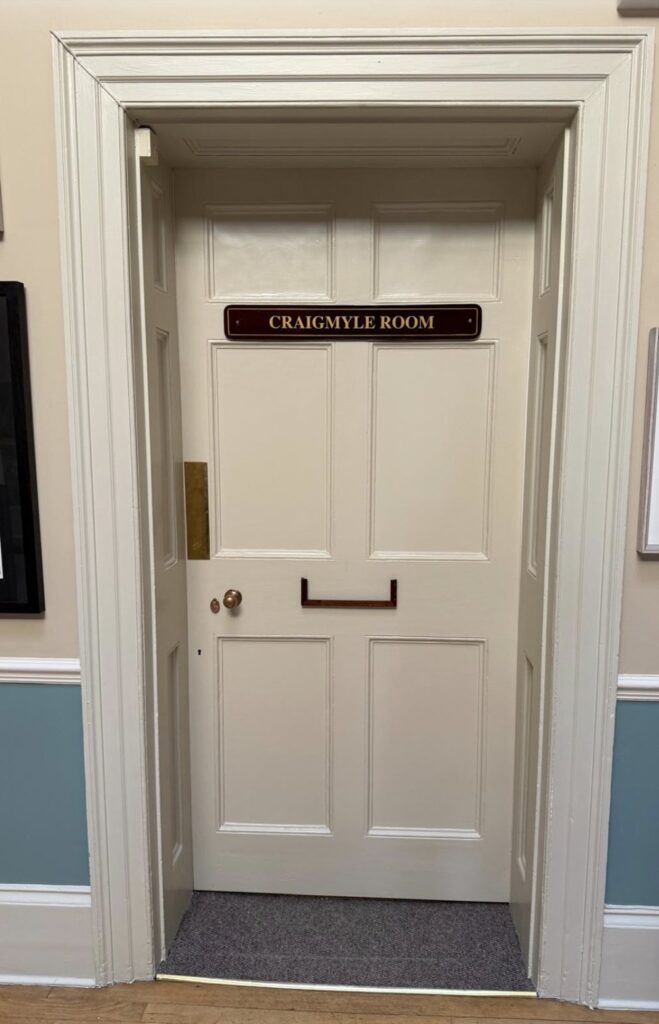
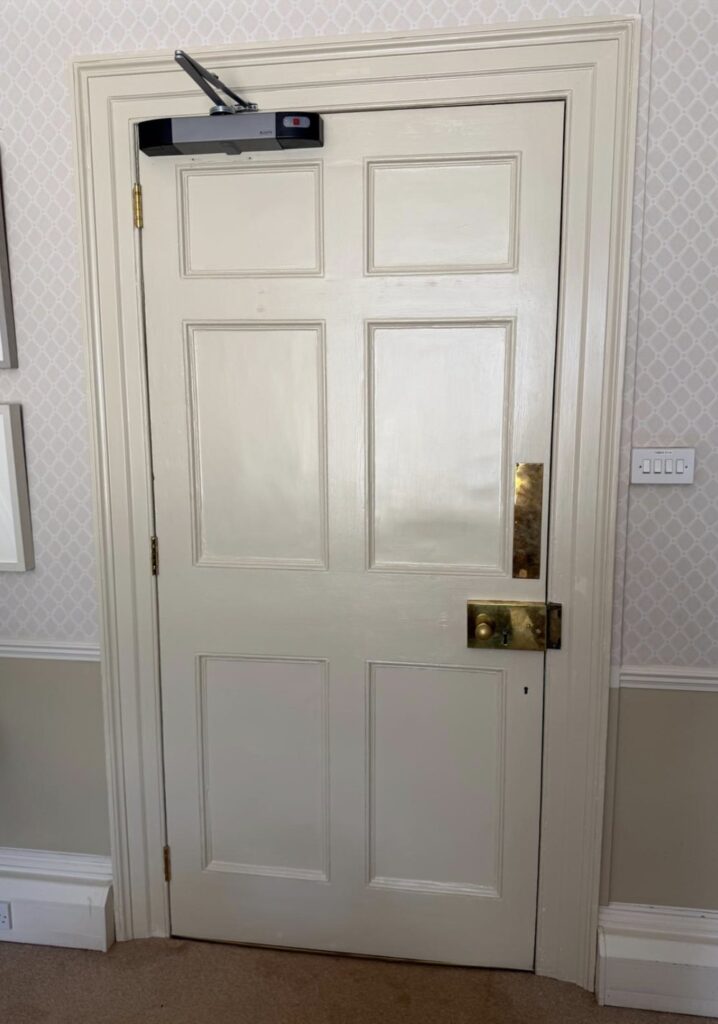
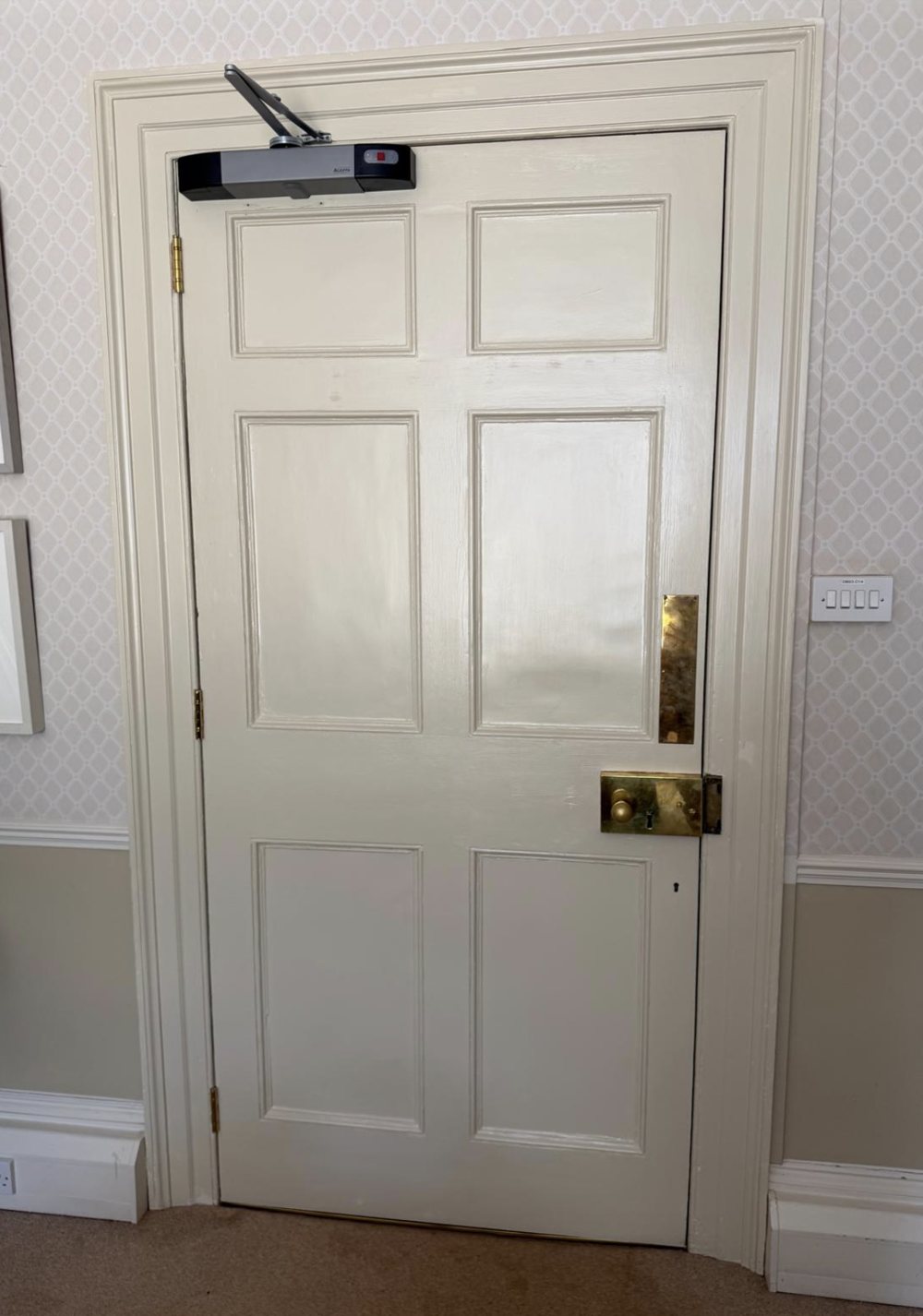
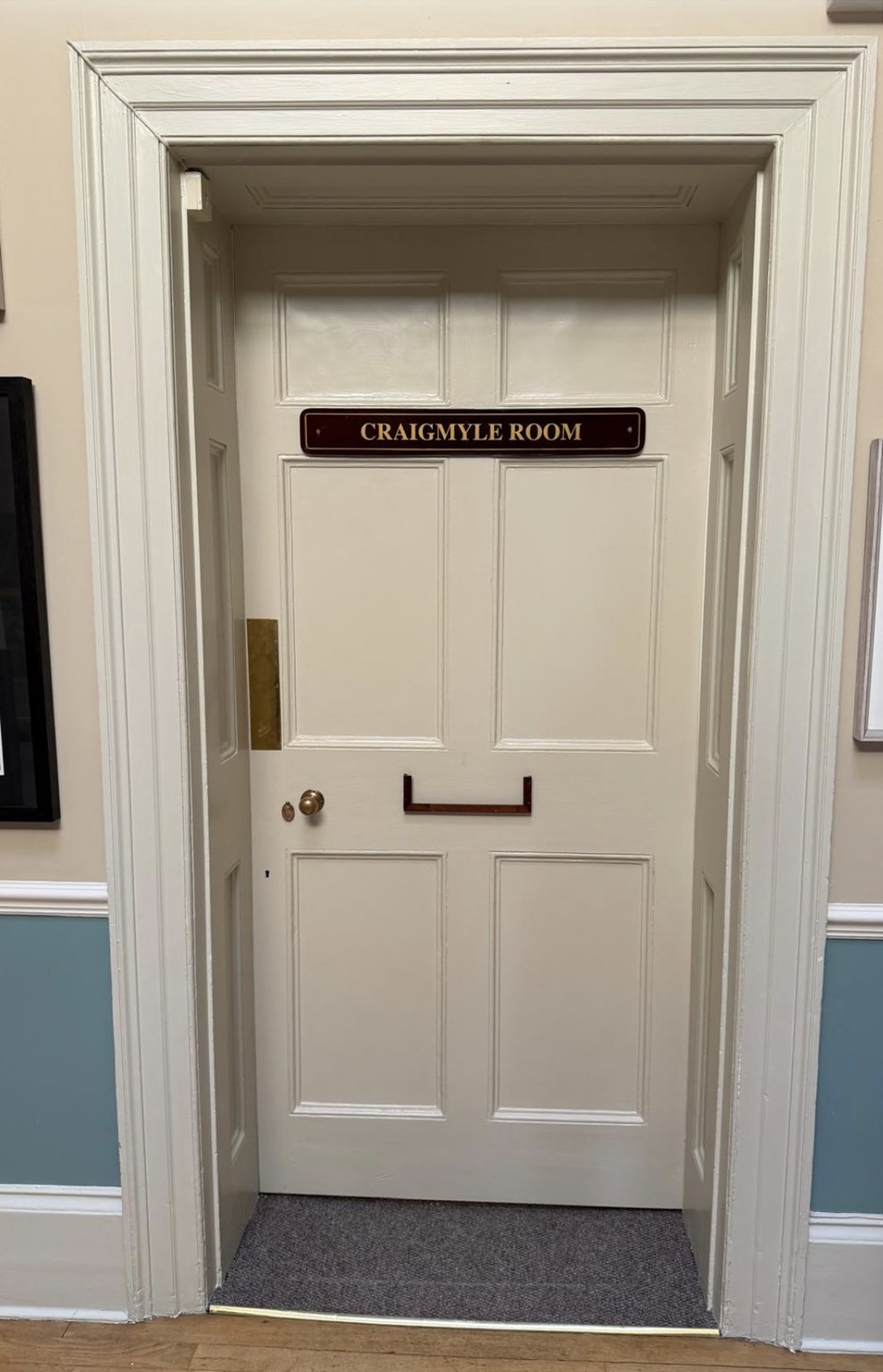
The first was a conservation challenge. The heritage door to the Craigmyle Room, a fine panelled timber door forming part of the building’s protected fabric, needed to be brought up to a certified level of passive fire resistance without losing the period detail that makes it what it is. The door could not simply be swapped for a modern certified leaf; it had to be carefully remediated in place, panel by panel, seal by seal.
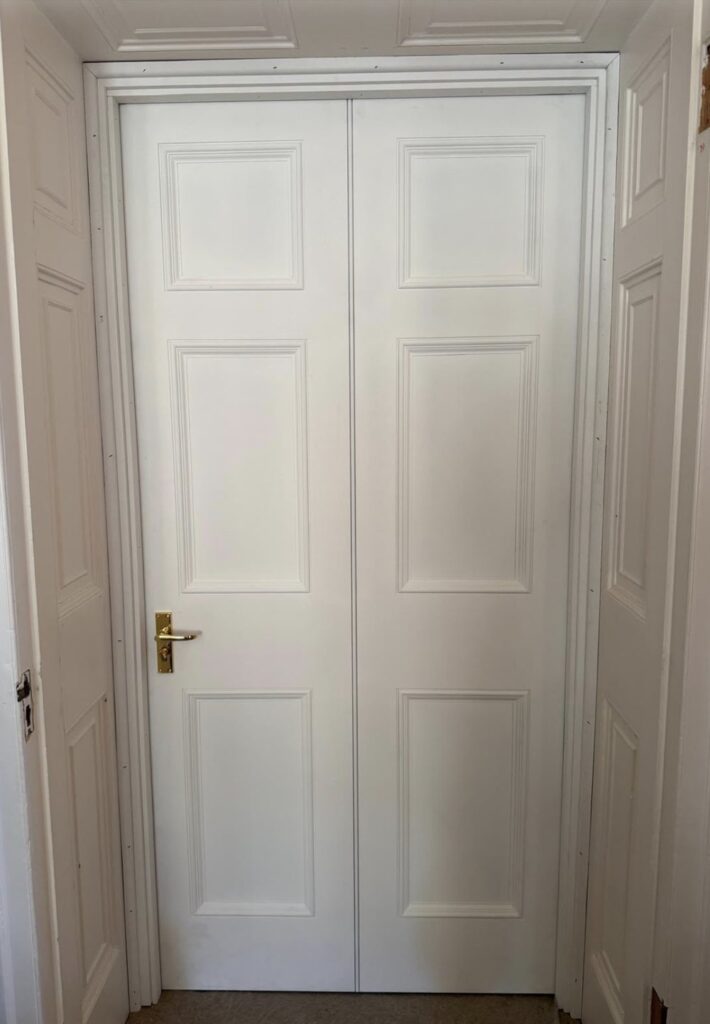
The second was an acoustic challenge in a completely different part of the building. To an inner library door, away from the building’s fire compartmentation, we designed, supplied and fitted a brand-new, non-fire-rated door-set built to match the existing joinery. Here the objective was not fire performance but sound separation, improving privacy between the inner library and its adjoining rooms while keeping the new door-set visually indistinguishable from the originals around it.
Location
Farleigh School, Red Rice, Andover, Hampshire
Building
The historic main building (Grade-listed country house)
Client
Farleigh School
Scope
Heritage fire door remediation (Craigmyle Room) and a new bespoke acoustic door-set (inner library)
Fire door consultant
Jerry Quayle & Associates Ltd — independent assessor, AAFDI / FPA
Ratings achieved
Notional FD30 to BS 8214:2016
Our appointment
Our appointment and the assessment route
Throughout the fire remediation works we worked to the prescriptions of Jerry Quayle & Associates Ltd (JQA), independent fire door assessors and members of the AAFDI and the Fire Protection Association. JQA’s assessments are produced using the principles of the Passive Fire Protection Forum (PFPF) Industry Standard Procedure, guided by BS ISO/TR 12470-2:2017 and EN 15725:2023, with compliance judged against BS 8214:2016. Every intervention on the heritage door was treated as a unique conservation task, not a production exercise.
The remediation programme
The Craigmyle door: remediated with precision, in situ
Working directly to JQA’s prescriptions, every aspect of the Craigmyle door assembly was addressed, from panel construction and seals through to hardware, gaps and thresholds. Nothing was assumed; every intervention was deliberate and traceable.
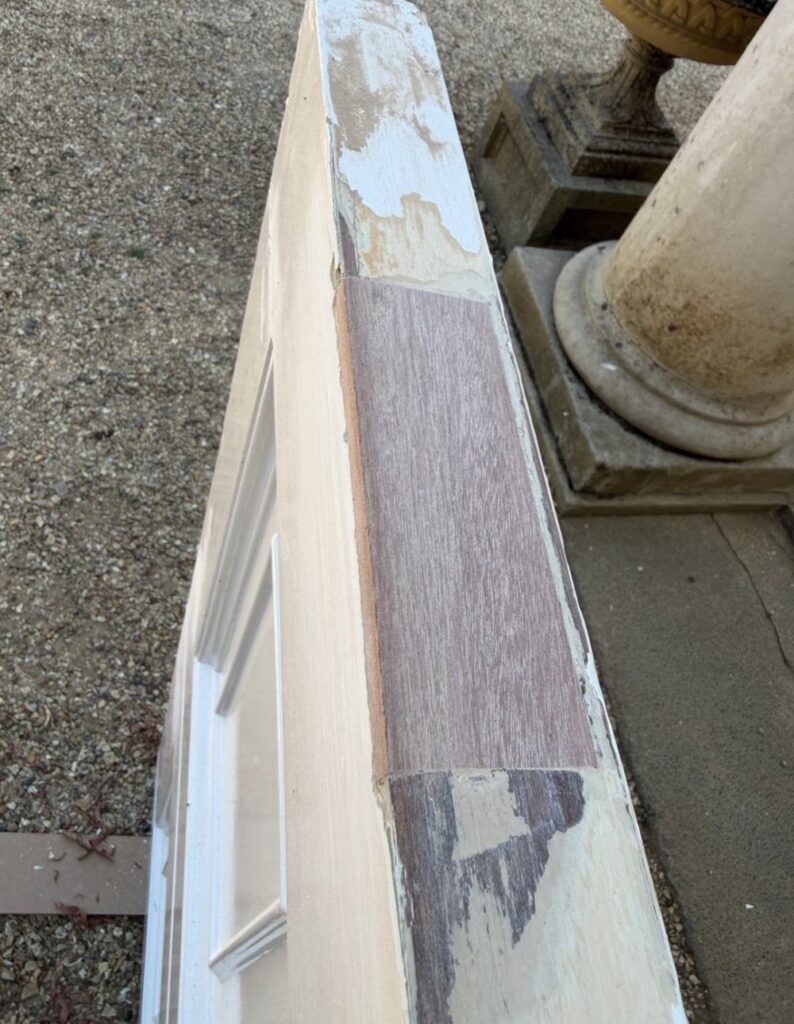
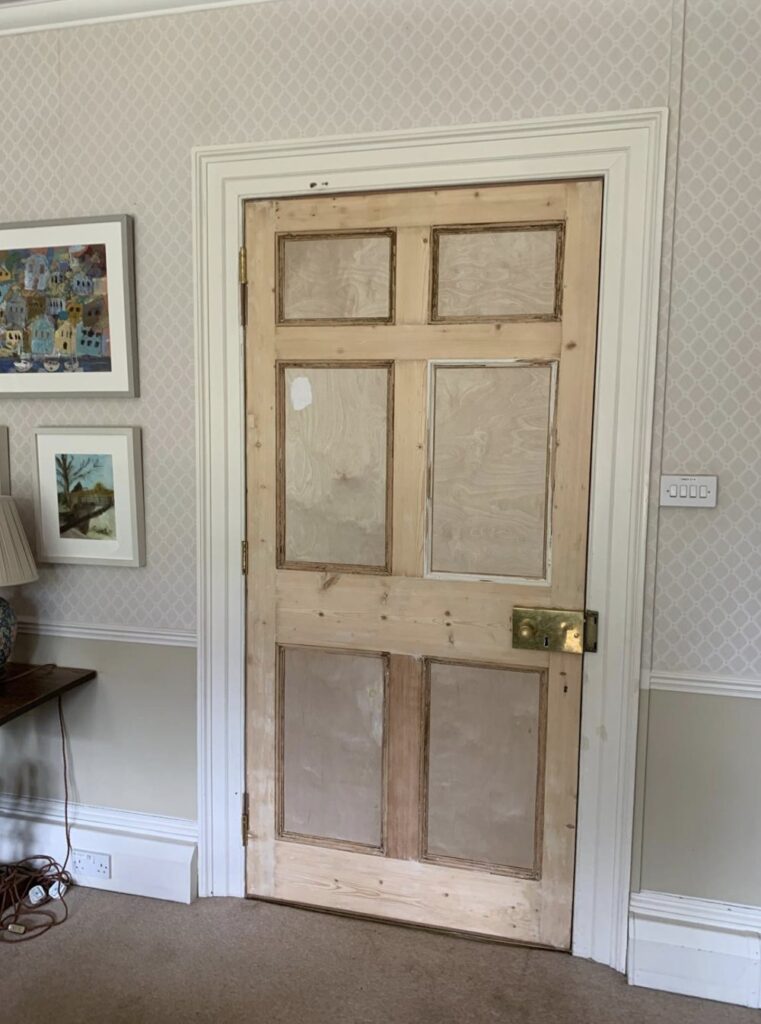
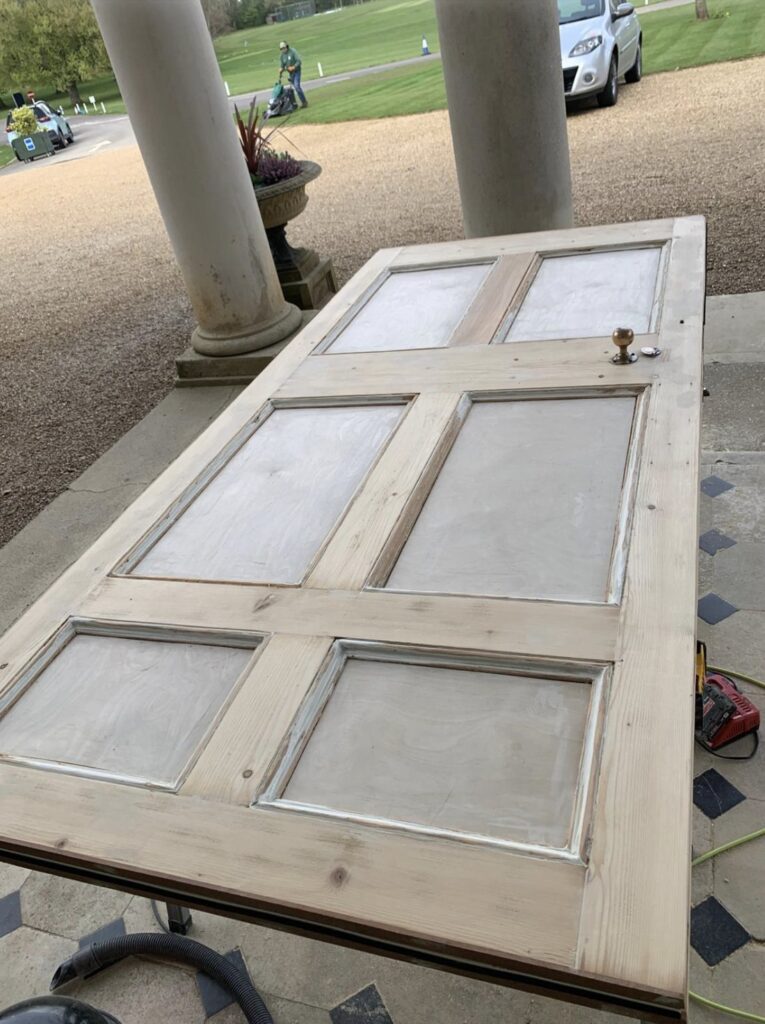
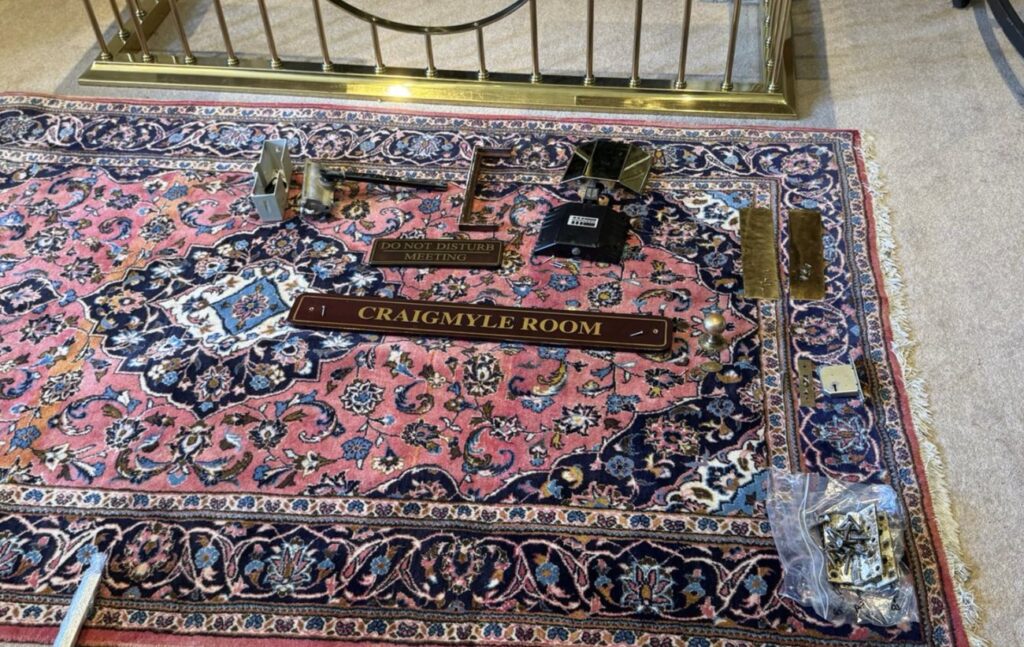
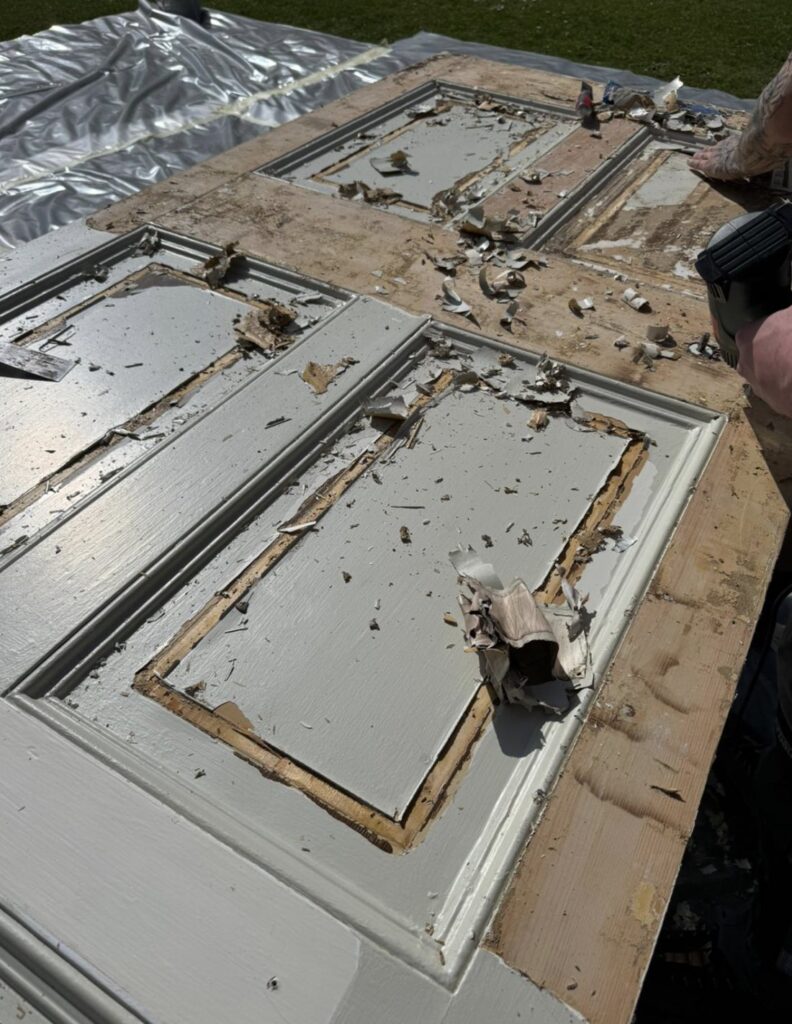
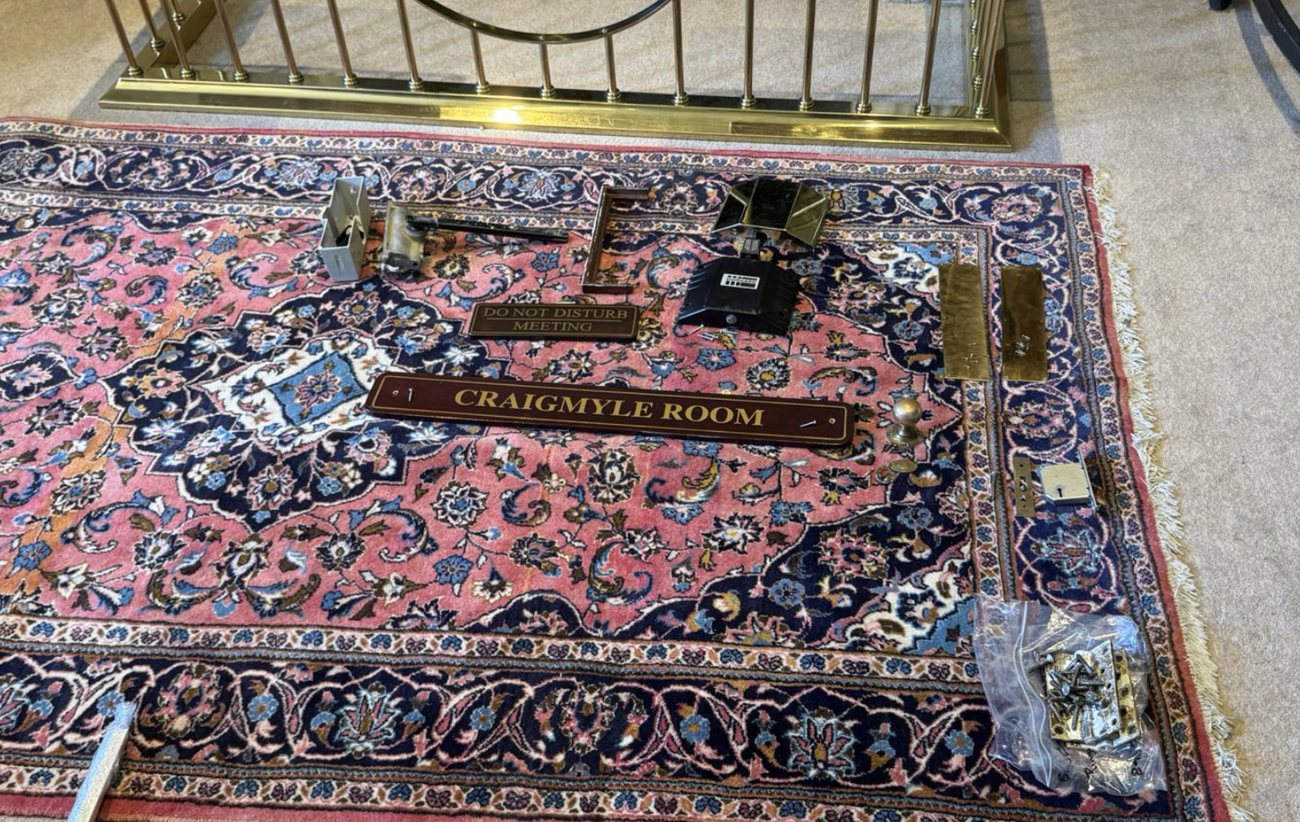
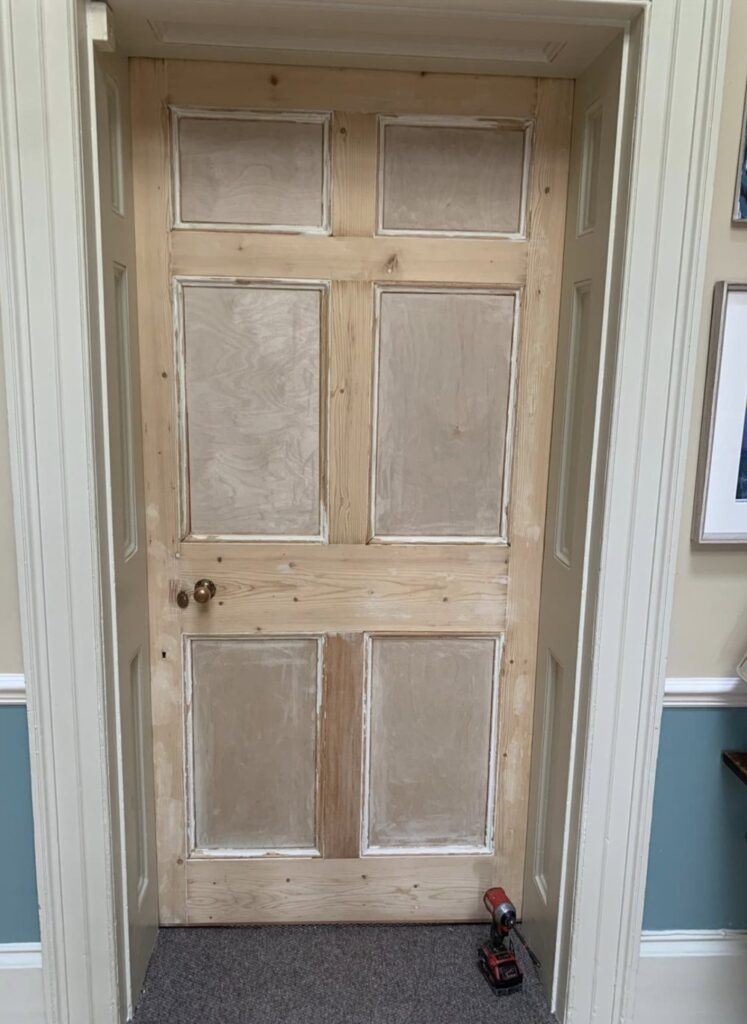
Strip and assess. Before any fire upgrade could begin, the door was taken down and its heritage ironmongery, including the brass furniture, letterplate, escutcheon and the engraved Craigmyle Room nameplate, was carefully removed, catalogued and set aside for reinstatement. Decades of layered paint were then stripped back to reveal the true timber construction of the leaf, so that the assessor could judge panel thickness, joint condition and the real substrate we would be working with.
Panels. Panel construction is central to any heritage fire door assessment. In line with JQA’s methodology, the door’s panels were upgraded to guarantee integrity for the full fire period using FireFace Plus fire-rated cladding, which carries empirical test evidence in heritage joinery doors. The upgrade is beaded into the existing bead housings so that the original moulded profiles and the outward appearance of the door are fully retained.
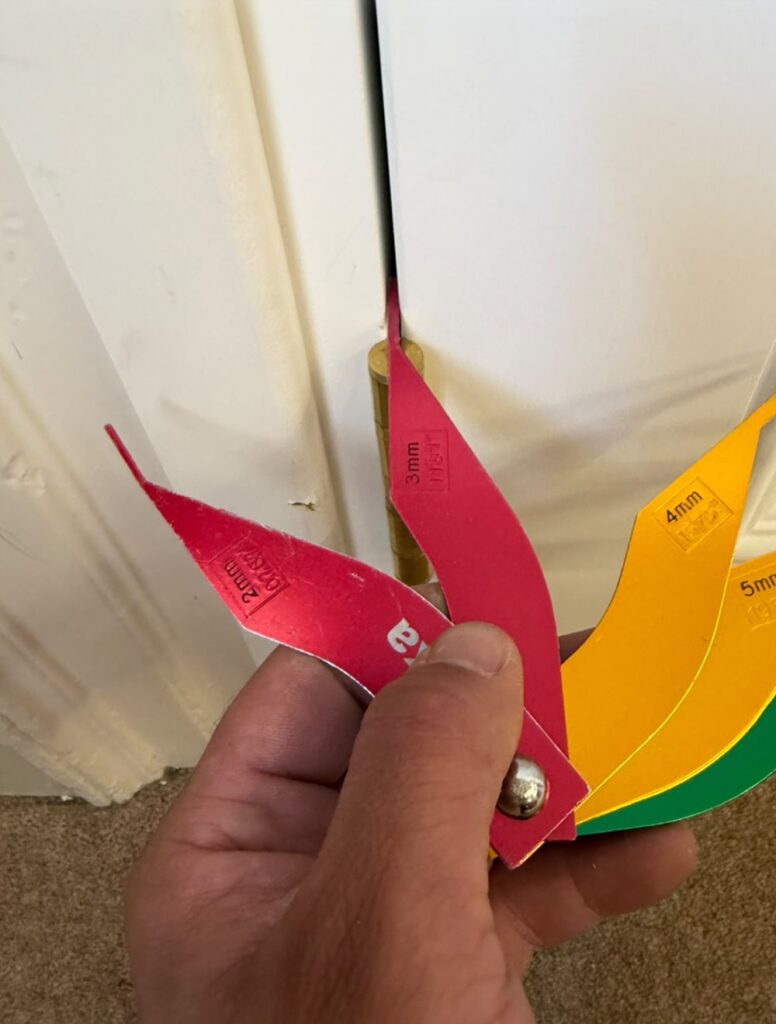
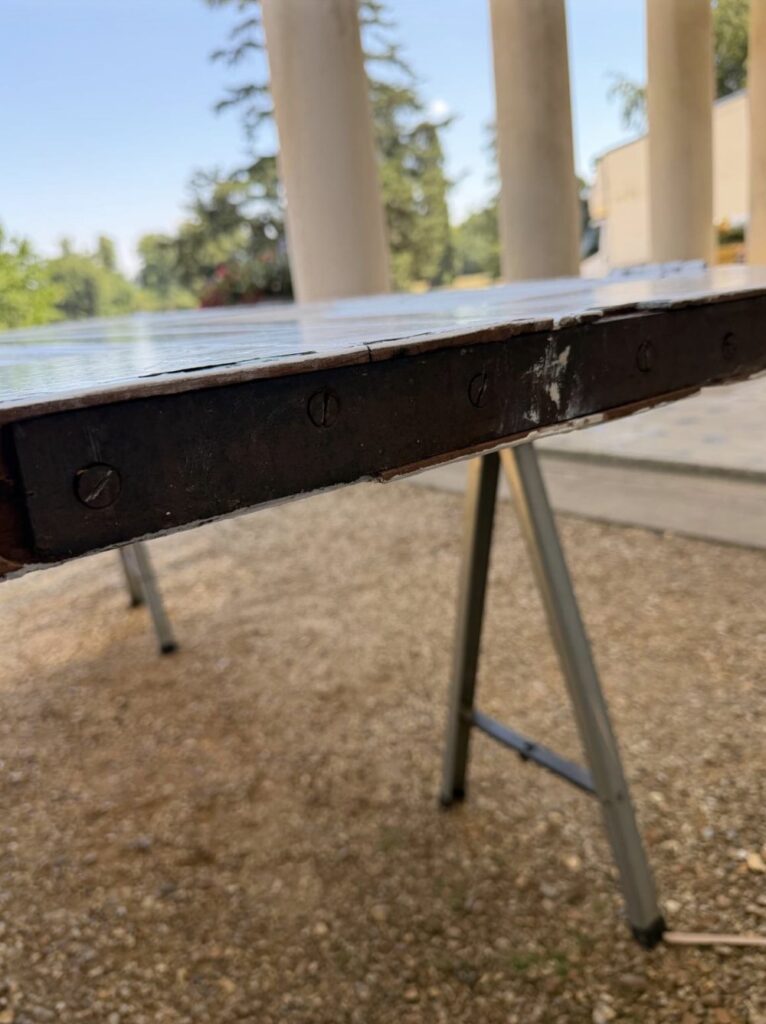
Seals, gaps and thresholds. New combined intumescent and cold-smoke seals were installed to the leaf edges, with the perimeter gaps set and checked to the tolerances required for a notional fire door. Every gap around the leaf was verified with feeler gauges to confirm it fell within the permitted range. A rebated drop-down seal was introduced to the bottom of the leaf to maintain the required maximum 10mm undercut while providing cold-smoke protection at the threshold, and batwing smoke and acoustic seals were added to the door stops.
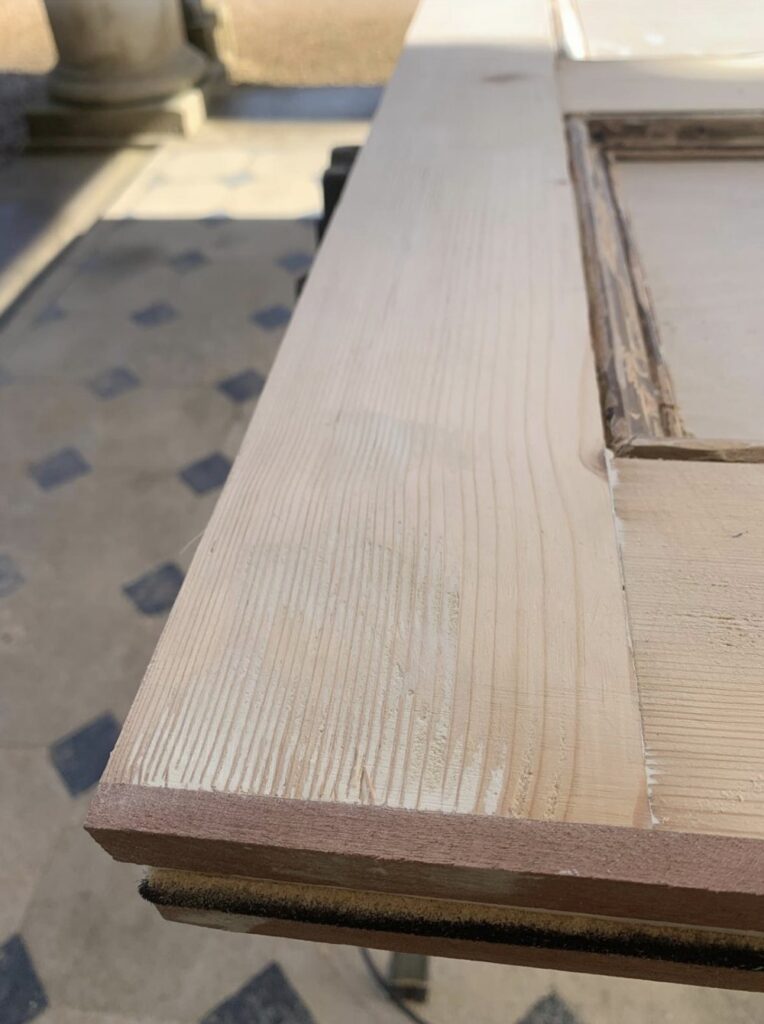
Hardware. All existing hinges were replaced with UKCA-marked, Certifire-approved hinges, fitted with intumescent interdens beneath the faceplates. The lock case was replaced with a UKCA-certified unit, and a controlled overhead closer was fitted to ensure the leaf returns fully to the frame every time. Every hardware selection was made with care for the heritage aesthetic: period-appropriate in profile and finish, while meeting full certification requirements.
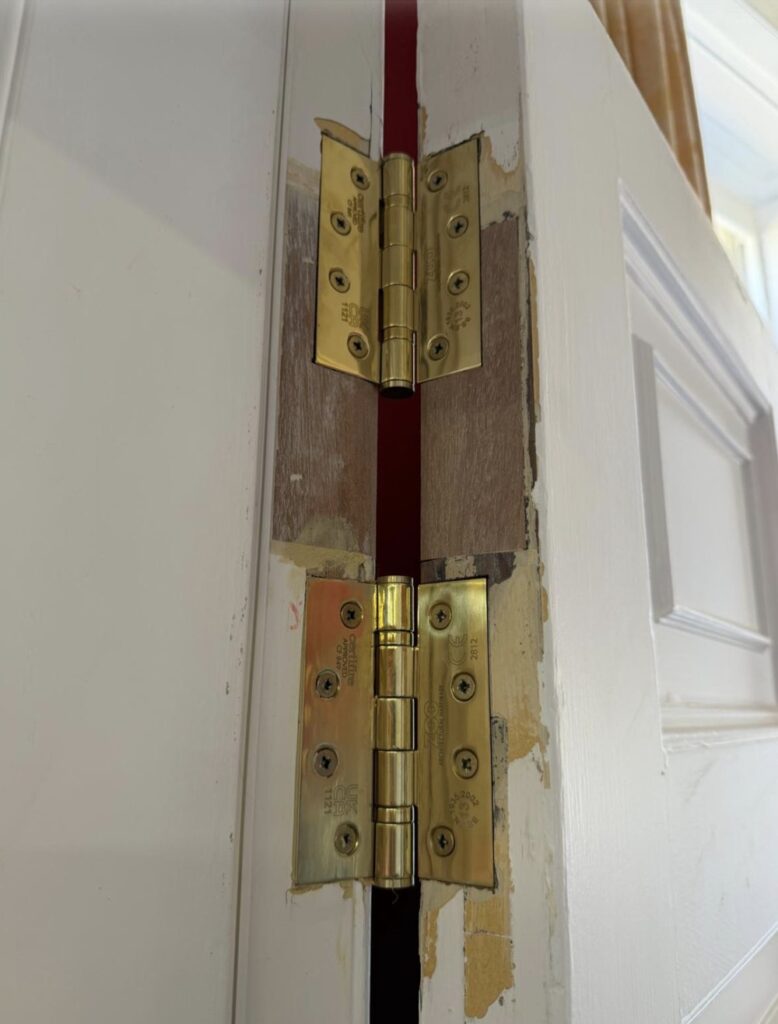
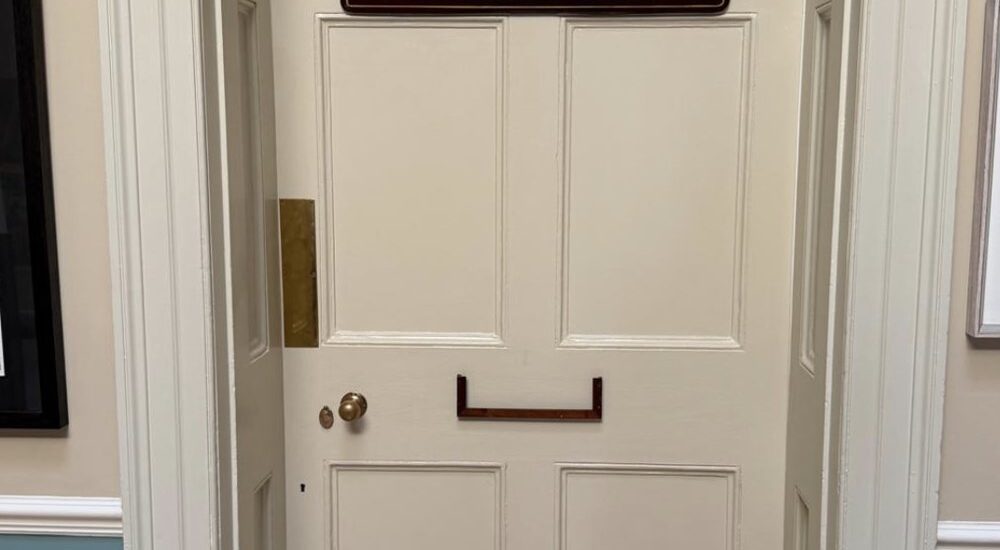
Reinstatement. With the fire upgrade complete, the door was decorated to match its surroundings and the original ironmongery reinstated, with the brass furniture, letterplate and the engraved Craigmyle Room nameplate returned to their exact positions. Rehung on its new certified hinges, the door reads exactly as it always has: a fine period door in a fine period building, now performing as a Notional FD30 fire door.
The inner library: a new door-set, built to match, tuned for sound
Elsewhere in the building, deliberately away from the fire compartmentation, the inner library needed better acoustic separation from its adjoining rooms. Here the brief was not fire but sound, and sympathy of design.
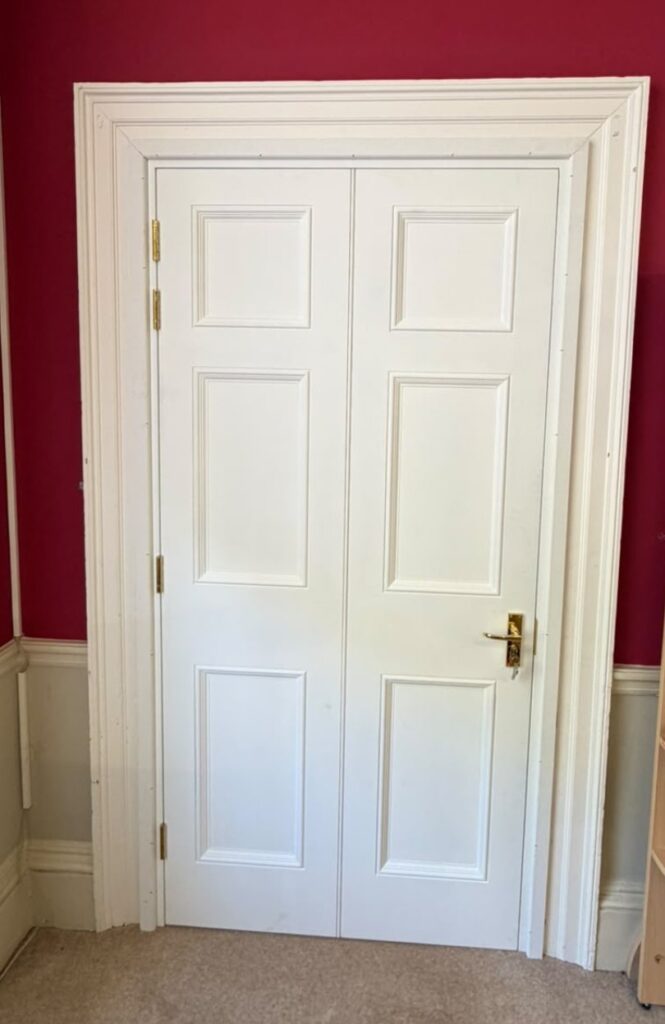
We designed, supplied and installed a brand-new, non-fire-rated door-set built to match the existing joinery, replicating the panel layout, mouldings, proportions and painted finish of the surrounding original doors so that the new set sits invisibly within the historic interior. Because this opening plays no part in the building’s fire strategy, the door-set was optimised purely for performance in use: improved acoustic performance between the inner library and the rooms beyond, achieved through a solid, well-sealed leaf and a close-fitting, draught- and sound-controlled frame.
Why a new door-set here rather than remediation? This opening sits outside the fire compartmentation line, so it carried no fire resistance requirement, and the existing arrangement simply did not provide the acoustic separation the library needed. A purpose-built, matched door-set gave us full control over the leaf construction and seals for acoustic performance, with joinery detailing that keeps faith with the heritage interior. The result is a door-set that looks as though it has always belonged, matching its neighbours down to the panel bead, while quietly delivering the sound privacy the library required.
The outcome
Two very different objectives, one consistent standard of care. The Craigmyle heritage door now carries a certified fire rating with none of its character lost. The inner library gains a purpose-built door-set that matches the building and performs acoustically, exactly where fire performance was not the requirement. The fire remediation works were independently assessed and signed off by Jerry Quayle & Associates Ltd to the PFPF Industry Standard Procedure
Heritage preserved. Performance delivered.
If you are responsible for a listed or heritage building and need fire doors brought up to standard without losing the detail that makes them special, talk to us. We remediate in situ, work to independent assessor prescriptions, and match new joinery to old so that compliance never comes at the cost of character.